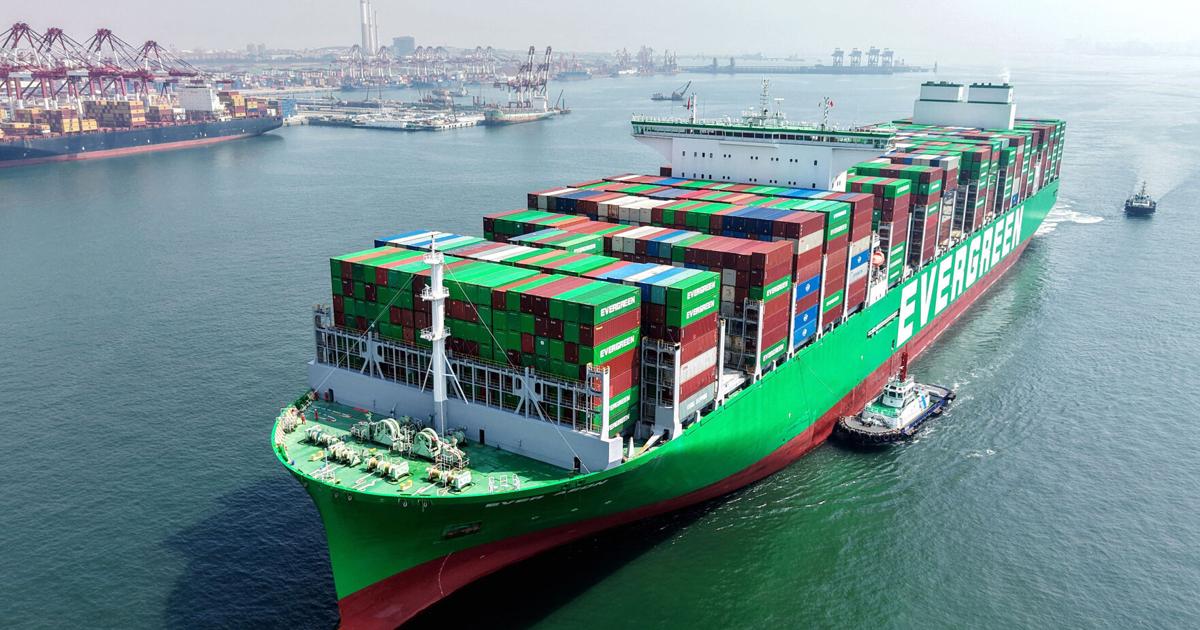
Trump claims ships carrying oil are moving out of the strait of Hormuz
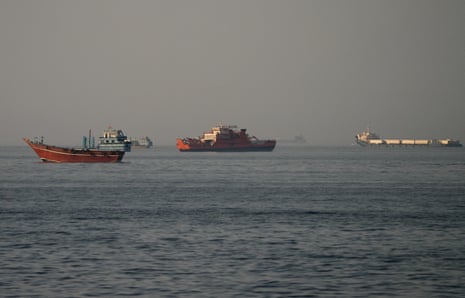
In a post to Truth Social, the US president, Donald Trump, has just claimed that ships carrying oil are “starting to move†out of the strait of Hormuz, even though many shippers say the arrangement to cross the waterway remains unclear and consider it too risky for ships to commence transit again. Trump wrote:
double quotation mark Ships are starting to move, many loaded up with Oil, out of the Strait of Hormuz. They are going along the Southern “Highway,†which is totally safe, secure, and pristine. There are other areas of travel, also!!!
Shipping companies and insurers will feel like the strait is safer for passage after the framework peace deal with Iran is signed and the remaining mines cleared.
Key events
Here are some of the latest images being sent to us over the newswires from Lebanon, where displaced people have begun to make their way back to their homes despite fears of a resumption of Israeli attacks occurring in the south:


Gaza's health ministry said in its latest update that at least six people were killed and six others injured in Israeli attacks across the territory over the past day. It said one other person's body had been recovered in that time frame.
The health ministry says 992 people have been killed in Israeli attacks since the ‘ceasefire' between Israel and Hamas came into effect in October 2025.
It says that 73,003 people, many of whom were women and children, have been killed in Israeli attacks across Gaza since October 2023, when Israel launched its assault on the territory following the Hamas-led attack on southern Israel on 7 October 2023, in which about 1,200 people were killed and 251 taken hostage.
Lebanon's prime minister Nawaf Salam has said diplomatic efforts with the US are continuing in order to achieve the full withdrawal of Israeli troops from territory in southern Lebanon. Speaking to his cabinet, Salam said:
double quotation mark Since the start of the war imposed on Lebanon, the Lebanese government has continuously worked to bring it to an end and to spare Lebanon and the Lebanese people further harm.Today, we hope that the ceasefire announced by the United States of America and the Islamic Republic of Iran will succeed in putting an end to this war and stopping the killing, destruction, displacement, and all the tragedies and suffering inflicted upon the Lebanese people.
I can only extend my sincere thanks to all those who contributed to reaching this outcome.
As we have mentioned previously in the blog, Israel's defence minister, Israel Katz, said this morning that Israeli military forces will not withdraw from a vast swathe of territory they have seized in southern Lebanon despite the US-Iran agreement.

Speaking on the first day of the G7 summit in in Évian-les-Bains, French president Emmanuel Macron said a joint France-UK mission to ensure the strait of Hormuz opens was prepared to deploy “very quicklyâ€, with the French flagship aircraft carrier Charles de Gaulle ready to be in the zone “on a timescale of two to three daysâ€.
“We do every thing so that this accord is a reality and that Hormuz can reopen,†Macron said. He added that any deployment would be done with the agreement of the US and “in parallel with the Iraniansâ€, ensuring that “the reopening of Hormuz to take place peacefully and in a lasting mannerâ€.

In an interview with CNBC, the US vice president, JD Vance, said the “two big wins†for the American public is the immediate reopening of the strait of Hormuz, which has seen oil prices fall already, and the “long term commitment†that Iran will never develop or procure a nuclear weapon.
He said:
double quotation mark The agreement is fundamentally built around a two step verification process. We say to the Iranians you are welcome to have access to an unsanctioned economy, you are welcome to be re-invited into the world economy. But only if you honour the commitments that you make in this agreement. So, that is the leverage point and simultaneously the enforcement mechanism we have over their nuclear programme.
Vance went on to say that the expectation is for the strait to be “toll-free†for “the long termâ€, echoing Donald Trump's comments yesterday. “That's the sort of thing that we are going to figure out in these technical negotiations,†he said.
Iranian state media has reported the strait will open to toll-free transits for commercial vessels for a 60-day period. The waterway will be managed by Iran and Oman after that period and its exact management system from then on is unclear.
Trump claims ships carrying oil are moving out of the strait of Hormuz
In a post to Truth Social, the US president, Donald Trump, has just claimed that ships carrying oil are “starting to move†out of the strait of Hormuz, even though many shippers say the arrangement to cross the waterway remains unclear and consider it too risky for ships to commence transit again. Trump wrote:
double quotation mark Ships are starting to move, many loaded up with Oil, out of the Strait of Hormuz. They are going along the Southern “Highway,†which is totally safe, secure, and pristine. There are other areas of travel, also!!!
Shipping companies and insurers will feel like the strait is safer for passage after the framework peace deal with Iran is signed and the remaining mines cleared.
Hezbollah has welcomed the memorandum of â understanding â between the ​United States and â Iran, saying it had resulted in â a comprehensive ​ceasefire ‌across ‌all fronts, including Lebanon.
In ‌a written statement, the Tehran-backed group warned Israel that it ‌would not accept any attacks ​that violate Lebanon's sovereignty or targeted its â people.
It said Lebanon's ​inclusion ​in the ​agreement reflected Iran's ​commitment ‌to ​ending ​the war.
Iran's foreign ministry said on Monday that Tehran still holds “deep mistrust†of the United States despite an agreed framework aimed at ending the war.
“Unfortunately, it must be acknowledged that Iran's deep mistrust of the United States stems from long history of wrongdoing by American leaders,†said foreign ministry spokesman Esmaeil Baqaei in a weekly press briefing.
“The United States still has a long way to go before it can earn the trust of the Iranian people,†he noted, adding that the framework was “merely a step toward reducing tensions and end a war†which broke out late February.
Iran's stocks of enriched uranium need to be neutralised and placed under the supervision of the UN atomic agency, French president Emmanuel Macron said on Monday.
“We will ensure that the enriched uranium capabilities that remain are properly neutralised,†Macron said after US president Donald Trump announced a deal with Iran.
The sensitive stocks should be “either taken out, or diluted†and then looked after by the International Atomic Energy Agency (IAEA), Macron said.
Hezbollah has not carried out any operations since Iran-US deal, official says
A Hezbollah â official has told the Reuters news agency â that the â militant group ​has not carried out any operations â since the Iran-US framework peace deal was â announced yesterday, adding that ​its position ‌on the ‌ceasefire was linked ‌to Israel's adherence to it.
The official said Hezbollah rejects Israeli “freedom of movement†in ​Lebanon and said Iran delayed signing the deal with â the US to monitor ​Israel's adherence ​to the ​ceasefire in ​Lebanon.
Israel has fiercely resisted Lebanon's inclusion in the deal, where its forces have mounted a broad assault and occupied a swath of land in the south.
The US president, Donald Trump, called for restraint on Sunday after Israel launched fresh airstrikes on the Lebanese capital of Beirut.
Pakistan, a key mediator between the US and Iran in peace talks, says it will oversee the formal signing ceremony of the framework agreement in Geneva, Switzerland, on Friday, according to Al Jazeera.
The country's prime minister, Shehbaz Sharif, told the National Assembly session in Islamabad that “after three months and 16 days of unparalleled trials, the immediate and permanent cessation of military operations has been announced across all fronts, including Iran, America, and Lebanonâ€.
Indian outrage over US killing of sailors mounts as leaders attend G7 summit

Hannah Ellis-Petersen
Fury has continued to mount in India over the US's refusal to apologise for the deaths of Indian sailors killed in strikes in the strait of Hormuz, further straining relations between the two countries as their leaders meet at the G7 summit in France this week.
Last week, three Indian seafarers, who were working on board commercial oil tankers, were killed when the US launched missile strikes on the vessel as it sailed through the strait of Hormuz.
The deaths were the first since the US military began in April its blockade of the strait in an attempt to squeeze Iran's economy and push its government towards a peace deal.
However, the seemingly blase response from the US government to the killing of the sailors has been the cause of great consternation in India. Headlines over the weekend simply read: “No apology from Washington.â€

The initial US government statement initially did not even make any mention of the deaths, instead just confirming that its forces had carried out a strike on a vessel in the strait that was allegedly in violation of sanctions, and which had been “uncooperativeâ€.
The Indian government first condemned the strikes with “strong protest†and summoned a senior US diplomat to convey that the strikes must stop.
But as pressure over the attack continued to build in Delhi, India's foreign minister, Subrahmanyam Jaishankar, spoke directly to the US secretary of state, Marco Rubio, sending a signal that India would not simply let the matter slide. You can read the full story here:
Iraq's foreign ministry expressed its “satisfaction with the announcement on the imminent reopening of the strait of Hormuz to normal navigation, given its crucial importance in ensuring the flow of oil and gas to global marketsâ€.
The US-Israel war on Iran badly hit Iraq's economy. Iraq relies on oil revenues for roughly 90% of its budget, and most of its oil is exported through the strait of Hormuz, which was effectively closed by Iran in response to being attacked.
The war also led to a sharp reduction in the volume of imported goods reaching southern Iraq's ports, while attacks halted traffic at the border it shares with Iran.
The Lebanese army has warned residents displaced by Israel's war to “exercise caution†in returning to their homes in the border villages in the south because of the ongoing risk of Israeli attacks. In a statement posted to social media, the army said:
double quotation mark In light of the recent developments in the region and amid circulating news regarding the achievement of a ceasefire, the army command emphasizes the necessity for residents to exercise caution in returning to the southern border villages and towns, and to adhere to the directives of the deployed military units, to safeguard their safety from the dangers of violations and Israeli attacks.It also stresses the need for utmost caution and vigilance in areas that have been subjected to Israeli attacks, and to report any unexploded ordnance or suspicious objects to the nearest army centre or other security forces.
Lebanese president hopes US-Iran deal will put ‘definitive end’ to Israel’s war on Lebanon
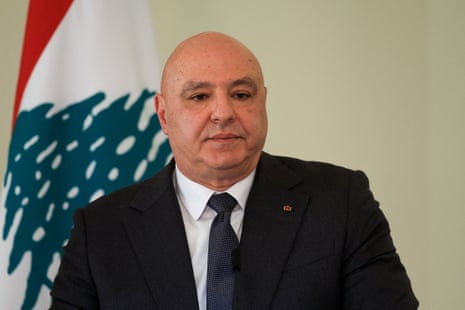
Lebanese President Joseph Aoun has said he hopes the US-Iran framework deal would put a “definitive end†to the conflict between Israel and Hezbollah, the Iranian backed Lebanese militant group and political party.
In a statement issued by his office, Aoun praised the memorandum's affirmation that “Lebanon's security and safety are an integral part of any effort to consolidate stability in the regionâ€.
The Lebanese people “look forward to these understandings transforming into practical steps that put a definitive end to the cycle of violence and establish a phase of stability, security, recovery and reconstruction,†the statement added.
Hezbollah, which operates independently from the Lebanese state, has not been a party to the negotiations between Israel and the government of Lebanon. Despite having been engaged in diplomacy with Lebanon, Israel was striking southern Lebanon and ordering mass evacuation orders on a near-daily basis. This was before the US-Iran agreement was announced yesterday.
It is yet to be seen if the Israeli attacks, which killed many civilians and destroyed civilian infrastructure, will continue in Lebanon going forward, a red line for Iran and something that will derail peace talks with the US.
Hezbollah had fired rockets and drones into northern Israel and against Israeli troops in southern Lebanon as the group rejected pushes for its disarmament and Israeli occupation of large areas of the south.
Donald Trump is set to head to the French spa town of Évian-les-Bains later today for the annual G7 summit.
The reopening/demining of the strait of Hormuz will likely be high on the agenda during his meeting with world leaders over the course of the three days.
Britain and France are among the countries that have expressed interest in assisting with demining efforts once the fighting had stopped.
You can keep up with all the latest developments in our Europe live blog here:
Iran's Fars news agency said on Monday, quoting what it said was an informed source, that Tehran added a clause on imposing maritime service fees to the framework deal with the US shortly before its announcement.
“In the final moments of the negotiations, the text of the memorandum of understanding was amended to clearly and explicitly emphasise the issue of the Iranian-Omani sovereignty over the strait of Hormuz,†reported Fars, a news agency close to the Iranian security services.
“The use of the term ‘maritime services' means that the United States has accepted that fees will be paid to Iran,†it added. There has been no official comment from the US on these fees, but Donald Trump claimed the agreement ensures the strait will be “permanently toll free†and has repeatedly insisted that Iran will not be allowed to impose tolls on commercial vessels trying to transit the waterway.